TALLOW BALM WORKSHOP - SEPT 28th

DIY Herbal Medicine Cabinet
How to Make a Herbal First Aid Kit at Home Using Native Irish Plants
DIYHERBAL RECIPES
3/26/20266 min read
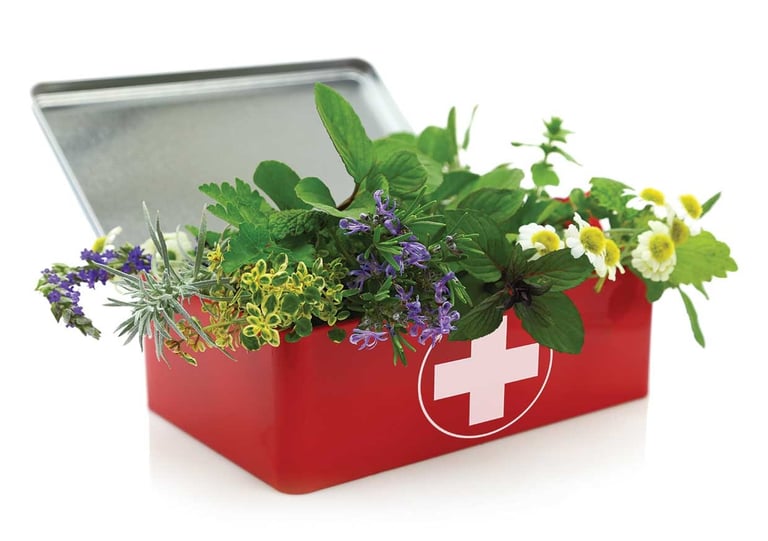
There is an old Gaelic saying: Níl aon leigheas ar an ngrá ach pósadh — there is no cure for love but marriage. But for the bumps, bruises, and ailments of everyday life? The Irish hedgerow has always had an answer.
Long before the pharmacy existed, every household in Ireland kept a small store of dried herbs, prepared oils, and simple preparations. A handful of plantain for a sting, a compress of yarrow for a cut, a cup of elderflower tea for a summer cold. This knowledge lived in kitchens and in the hands of the bean feasa — the wise woman of the townland.
Today, we can bring that tradition home again. This guide will show you exactly how to build a simple herbal first aid kit using plants that grow wild across Ireland — many of which you may already have in your garden or just beyond the gate.
✦ ✦ ✦
Why Make Your Own Herbal First Aid Kit?
A DIY herbal first aid kit gives you:
Natural, plant-based alternatives for minor everyday ailments
Remedies you understand, because you made them yourself
A living connection to Irish herbal tradition
Fewer synthetic chemicals in your home
A wonderful project to do with children — passing the knowledge on
This kit is designed for minor first aid situations: cuts, scrapes, bruises, stings, minor burns, headaches, upset stomachs, and colds. It is not a replacement for professional medical care.
✦ ✦ ✦
What You Will Need
Basic Equipment
Small glass jars with lids (50ml–100ml)
Dark glass dropper bottles for tinctures
Muslin squares or cotton cloth for compresses
A small tin or wooden box to keep everything together
Labels and a marker pen
Carrier Oils & Bases
Beeswax (for balms)
Olive oil or sunflower oil (for infused oils)
Raw honey (antibacterial, soothing)
Apple cider vinegar (for herbal vinegars)
Vodka or brandy, 40%+ (for tinctures)
✦ ✦ ✦
The Six Irish Plants for Your Kit
Each of these plants is native or naturalised to Ireland, freely available, and has a long history of traditional use. Where possible, forage from clean, unsprayed areas — or grow your own.
1. Slánlus — Plantain (Plantago lanceolata / Plantago major)
Gaeilge: Slánlus | meaning: 'healing herb'
Folklore: Plantain was known throughout Ireland as the 'Healing Herb of the Roads' — it grows wherever humans have walked, as if placed there by Providence. In old Irish manuscripts it was listed among the most powerful healing plants, and it was believed to draw poison from a wound as surely as a prayer.
Uses for your kit: Plantain is perhaps the most useful plant in the entire kit. Fresh leaves, bruised and held against a wasp or nettle sting, bring almost instant relief. A simple poultice of crushed leaf draws splinters and soothes infected cuts. An infused oil of dried plantain is excellent in a healing salve.
How to prepare: Make a plantain-infused oil by filling a jar with dried plantain leaf and covering with olive oil. Leave for 4–6 weeks in a warm spot, then strain. Use this as the base of your skin-healing balm.
2. Cathair Lus — Yarrow (Achillea millefolium)
Gaeilge: Cathair Lus | also: Lus na Fola (herb of the blood)
Folklore: Named for Achilles, who is said to have used it on the battlefield to staunch the wounds of his soldiers. In Ireland, it was called Lus na Fola — the herb of blood — and tucked into wounds by healers across the provinces. It was also carried as a protective charm and woven into Midsummer garlands.
Uses for your kit: Yarrow is the classic wound herb — it helps slow minor bleeding, reduces inflammation, and has antiseptic properties. A cooled yarrow tea makes an excellent wash for cuts and grazes. As a tincture, it can also support the body through colds and fevers.
How to prepare: Dry yarrow flowers and leaves in summer when in full bloom. Make a simple tea (1 teaspoon dried herb to a cup of boiling water, steep 10 minutes) or prepare as a 1:3 tincture in vodka. Strain after 4 weeks and bottle in a dark dropper bottle.
3. Trom — Elderflower & Elderberry (Sambucus nigra)
Gaeilge: Trom | meaning: 'heavy' — referring to the laden berry clusters
Folklore: The elder was one of the most sacred trees in Irish tradition — a faery tree, never to be cut without permission. Every part was used medicinally. To sleep under an elder in bloom was said to bring vivid dreams. An old rhyme warned: 'Cut elder and you'll rue the day, for the faery folk won't stay away.'
Uses for your kit: Elderflower tea or tincture is wonderful for summer colds, hayfever, and sinus congestion. Elderberry syrup (made from the ripe berries in autumn) is one of the best-loved immune tonics in the herbal tradition and a staple in any home first aid kit. A cooled elderflower infusion can also be used as an eye wash for tired, irritated eyes.
How to prepare: Simmer elderberries with water, honey, cloves, and cinnamon to make a simple syrup. Bottle in sterilised jars and keep in the fridge. Take a teaspoon at the first sign of a cold or as a daily tonic through winter.
4. Lus Mór — Mullein (Verbascum thapsus)
Gaeilge: Lus Mór | meaning: 'the great herb'
Folklore: Mullein's tall golden spikes were once dipped in tallow and used as torches — it was called the 'hag's taper' across Ireland and Britain. The enormous soft leaves were used as an early form of insulation in shoes and wrapped around aching joints on cold nights. It was a plant of threshold places — roadsides, ruins, and the edges of fields.
Uses for your kit: Mullein leaf is one of the finest herbs for chest and respiratory complaints. A simple mullein leaf tea soothes irritated airways, loosens mucus, and eases a persistent cough. Mullein flower oil — made by infusing the yellow flowers in olive oil — is a traditional remedy for earache, gently warmed and dropped into the ear.
How to prepare: For mullein flower oil, collect the yellow flowers fresh and place in a small jar. Cover with olive oil and leave on a sunny windowsill for 3–4 weeks. Strain well through muslin and bottle. Gently warm before use in the ear.
5. Neanntóg — Nettle (Urtica dioica)
Gaeilge: Neanntóg
Folklore: The nettle is one of Ireland's most ancient useful plants — its fibres were once used to make cloth before flax became common. In folklore, nettles grown near a house were said to protect the family within. There is a saying: 'The nettle stings to teach you — handle it boldly and it will not hurt you at all.' A metaphor that extends well beyond the garden.
Uses for your kit: Cooked or dried nettles are powerfully nutritive — rich in iron, calcium, and vitamins. A daily nettle tea during spring is one of the finest seasonal tonics available. Topically, nettle tincture can reduce the itch and inflammation of eczema and skin irritations. Ironically, fresh nettle sting itself (urtication) has long been used for joint pain — though this is best left to those experienced in its application.
How to prepare: Dry young spring nettle tops and store in an airtight jar. Use 1–2 teaspoons per cup as a nourishing daily tea. For a tincture, use fresh nettles in a 1:3 ratio with vodka — this preserves more of the plant's active constituents than drying.
6. Lus na Meala — Meadowsweet (Filipendula ulmaria)
Gaeilge: Lus na Meala | meaning: 'herb of honey'
Folklore: Meadowsweet was one of the three most sacred plants in the Druidic tradition, alongside mistletoe and vervain. In Irish legend it is associated with Áine, goddess of the summer sun, and its creamy froth of flowers was strewn at weddings and wakes alike. The scent was believed to lift the heart from grief.
Uses for your kit: Meadowsweet contains salicylates — the natural compound from which aspirin was originally derived — making it a gentle pain reliever and anti-inflammatory. A cup of meadowsweet tea is soothing for headaches, fevers, and acid reflux. It is one of the kindest plants you can offer a stomach in distress. Note: avoid if sensitive to aspirin.
How to prepare: Dry meadowsweet flowers at the height of summer when the scent is strongest. Use 1–2 teaspoons per cup of just-off-the-boil water (boiling water can destroy the volatile compounds). Steep for 8–10 minutes and sweeten lightly with honey if desired.
✦ ✦ ✦
Putting the Kit Together
Once you have your preparations made, arrange them in a small tin or wooden box with clear labels. A well-stocked basic kit might include:
Plantain-infused oil or balm — cuts, stings, rashes
Yarrow tincture — wound wash, colds, fevers
Elderberry syrup — immune tonic, colds, flu
Mullein flower oil — earache, chest congestion
Nettle tea or tincture — spring tonic, skin irritations
Meadowsweet tea — headaches, fevers, upset stomach
Raw honey — wound dressing, sore throats
A small muslin compress cloth
A printed reference card with each remedy and its use
Store in a cool, dark place. Check preparations every six months and refresh as needed. Tinctures last 3–5 years; infused oils 12–18 months; syrups up to 3 months refrigerated.
✦ ✦ ✦
A Note on Safety
Herbal remedies have been used safely for thousands of years, but a few simple principles apply:
Always identify any plant with certainty before using it
Introduce new herbs one at a time to watch for any reaction
Consult a qualified herbalist before using herbs if you are pregnant, breastfeeding, taking medication, or treating a child
This kit is for minor first aid — for serious injuries or illness, seek medical attention
✦ ✦ ✦
Want to Learn More?
If this has sparked your interest, I run hands-on herbal workshops here in Donegal — including a Natural Family First Aid session where we make several of these preparations together and you leave with a full kit of your own. No experience needed, just curiosity and a love of plants.
Browse upcoming workshops at simpleherbalremedies.com